Stanford CVI story: developmental “memory” shapes arteries and disease risk
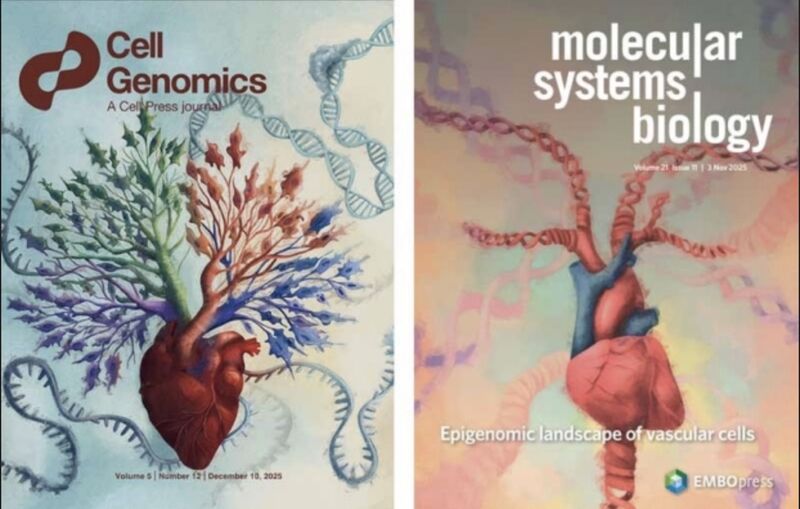
The Stanford Cardiovascular Institute (CVI) recently featured published a compelling story highlighting our collaborative work from the Weldy, Cheng, and Quertermous labs revealing that arterial segments carry a molecular “memory” of their developmental origin, and that this imprint shapes how arteries later respond to stress, injury, and disease.
The article “How Developmental ‘Memory’ Shapes the Arteries, and the Diseases They Face” explains how our two complementary studies (Zhao et al., Cell Genomics, 2025, Weldy et al., Molecular Systems Biology, 2025) — one mapping the transcriptional architecture of human arteries, and another characterizing the underlying chromatin landscape in animal models — uncover how embryonic lineage influences adult vascular biology and disease vulnerability.
Read the full Stanford CVI story
How Developmental “Memory” Shapes the Arteries, and the Diseases They Face →